
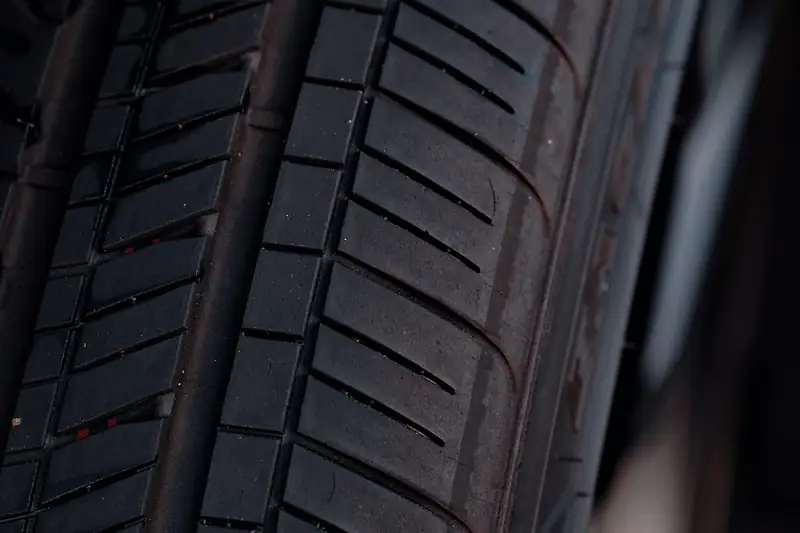
Why the tire pressure light comes on when it gets cold
Air shrinks when it cools. Your tires didn't spring a leak overnight. The same air is just taking up less space, and the pressure drops with it. Transport Canada puts it at about 7 kPa, or 1 psi, for every 5 °C drop. You'll see the American version of the rule as 1 psi per 10 °F, which works out to the same thing.
Here's how that adds up. Say your door sticker calls for 35 psi and you set them in a heated garage at 20 °C back in October. The first -15 °C morning in Dieppe is a 35-degree swing, which is about 7 psi gone. You're at 28. Tires also seep a little air on their own, about 2 psi a month according to Transport Canada, so a few weeks later you're in the mid-20s. Systems built to the U.S. federal standard have to warn you once a tire is 25 per cent under the placard pressure, which for a 35-psi tire is about 26. That's your light.
That's also why the light often goes out after 15 minutes of driving. The tires warm up, the pressure climbs back, and the warning clears. It isn't fixed. Next cold morning, it'll be back.
Finding the right pressure: the door sticker, not the tire
The number you want is on the tire information label, usually on the edge of the driver's door or the door post. Sometimes it's in the glove box or on the fuel door instead. Some vehicles list a different pressure for the front and rear, so read the whole label.
The number moulded into the tire sidewall is the maximum that tire can safely hold, not what your car should run. Transport Canada is blunt about it: don't use the pressure on the tire. Filling to the sidewall number gives you a hard ride, less grip on ice, and tires that wear out in the middle.
How to check tire pressure properly in winter
Check them cold, before you drive. Transport Canada counts a tire as cold if the car has sat for at least three hours or been driven less than 2 km. First thing in the morning in the driveway is ideal.
The common mistake around here is checking or filling in a warm spot. A tire that reads right in a heated garage, a car wash bay or a service bay will be low once it's back out at -20 °C with the wind coming off the Strait. If you have to fill up indoors, fill a few psi over the sticker and recheck once it's been outside for a few hours.
Use your own gauge. Transport Canada notes the pocket gauges from auto parts stores are generally more accurate than the ones on gas station air hoses. Knock the snow and slush off the valve before you put the chuck on, and put the cap back after. A valve packed with salty slush is how a slow leak starts.
- Check monthly, and after any big cold snap
- Check before a highway trip, say Moncton to Fredericton or over to the Island
- Do all four, plus the spare if you have one
- Fill to the door sticker number, measured cold
- If one tire is always lower than the rest, that's a leak, not the weather
Solid vs flashing TPMS light: what each one means
A solid light that comes on and stays on means one or more tires are low. Get a gauge on all four. If they're all a bit low and it's the first cold week of the year, it's almost certainly the temperature. Fill them and see if the light clears.
A light that flashes for about a minute when you start the car and then stays solid is a different message. On cars built to the U.S. standard, that sequence means the monitoring system itself has a fault, and while it's lit the system may not be able to warn you about low pressure at all. Your owner's manual will say if yours works that way. Common causes are a dead sensor battery, a sensor that's broken or corroded, wheels with no sensors in them, or a sensor the car hasn't learned yet.
Sensor batteries are sealed inside the sensor and don't last forever. When one dies, the sensor gets replaced. Our winters don't help: salt and brine are hard on the valve stems, and a corroded stem can leak or snap when someone goes to fill the tire.
Winter tire swaps and TPMS sensors
If you run winter tires on a second set of wheels, and your car has sensors in each wheel but the winter set doesn't, you'll get the flash-then-solid light all winter. You can put sensors in the winter wheels, but they often need to be programmed or relearned to the car before it recognizes them. Some cars pick them up after a drive, others need a specific procedure or a TPMS tool.
Some cars don't have sensors at all. They watch wheel speed through the ABS system and work out that a low tire is spinning slightly faster. These usually need a reset from the dash menu after a tire swap or after you adjust the pressures. Inflate to the correct pressure first, because the system uses whatever is in the tires at reset as its baseline. Check the owner's manual for your car's reset steps.
When it isn't just the cold: slow leaks from salt and rim corrosion
If one tire keeps going low while the other three hold, stop blaming the weather. A nail, a tired valve stem, and a leaking bead are the usual suspects. The bead is where the tire seals against the wheel. On alloy wheels, years of road salt can corrode that sealing surface until air creeps out a few psi a week.
Topping it up every Monday in the Champlain Place parking lot isn't a fix. Driving on a low tire builds heat in the sidewall and wears it out early. A tire shop can dunk the wheel to find the leak, clean the corrosion off the rim and reseal it.
We don't mount or balance tires. What we can do is come to your driveway and work out what the warning is actually telling you, whether that's the cold, a leak, or a sensor fault, so you know what you're asking a tire shop for before you book. If you're in Dieppe, Moncton, Riverview or Shediac, send us the vehicle, the problem and your postal code.
Checklist
- Find the tire information label on the driver's door edge or door post
- Check pressures cold, before driving, with your own gauge
- Fill to the door sticker number, not the sidewall maximum
- Recheck after any fill done indoors once the car has sat outside
- Clear snow and slush off the valve and put the cap back on
- Note whether the light is solid or flashes at start-up
- Reset an ABS-based system after inflating or swapping tires, per the owner's manual
- If one tire keeps dropping, have it checked for a puncture, valve or bead leak
People also ask
Is it normal for the tire pressure light to come on when it's cold?
Yes. Tires lose about 1 psi for every 5 °C drop, so the first cold morning can push them under the warning threshold without any leak. Fill them to the door sticker pressure and the light should clear.
Why did my tire pressure light go off after driving?
Driving warms the tires and raises the pressure, so the light can clear on its own. They're still low when cold, so check and fill them first thing the next morning.
Should I put extra air in my tires in winter?
Fill to the door sticker pressure, measured cold. If you're filling somewhere warm, go a few psi over and recheck once the car has been outside for a few hours. Never go past the maximum on the sidewall.
What does a flashing tire pressure light mean?
On many cars, a light that flashes for about a minute at start-up and then stays on means the monitoring system has a fault, like a dead sensor or wheels without sensors. It doesn't mean a tire is low, but the system may not warn you if one is.
Do winter tires need TPMS sensors?
If your car uses sensors in each wheel, winter wheels without them will keep the warning light on. Many people add sensors to their winter set, which then need to be learned by the car.
Want Justin to look at it?
Send the car, what it’s doing and your postal code. He calls back with the price before he drives out, in Dieppe, Moncton, Riverview, Shediac and around.
Get a quote Mobile Vehicle Diagnostics Call or text (506) 871-0669