
Is the light solid or flashing?
That's the first thing to check, and it changes everything. A solid light means the car's computer has found a problem and logged it. The U.S. EPA's guide to the system says there's no cause for panic: the car is telling you to get attention soon.
A flashing light is a different animal. The EPA describes it as a severe engine problem, such as a misfire bad enough to damage the catalytic converter. Unburnt fuel is going into the exhaust and cooking the converter from the inside. You can usually still drive, but keep it short, stay off the highway and don't haul anything heavy. Getting on Route 15 to Shediac at full speed with a flashing light is how a misfire becomes a misfire plus a new catalytic converter.
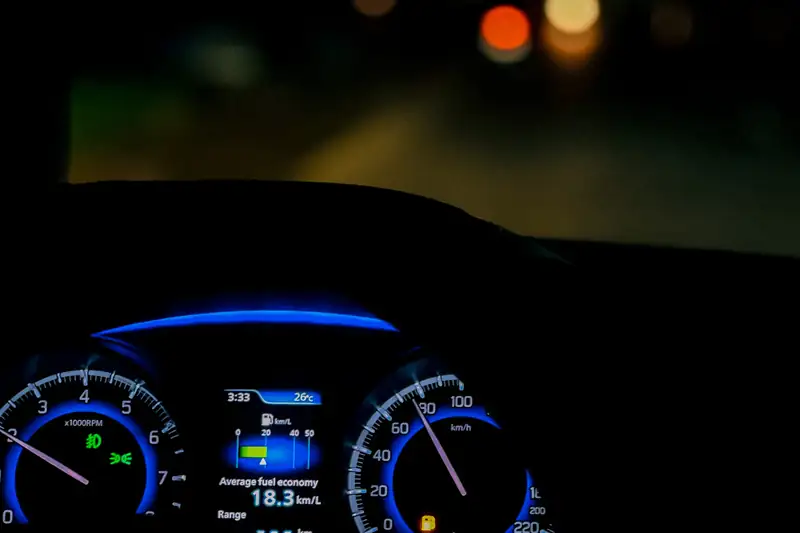
Also look at the rest of the dash. A red oil pressure light or a temperature gauge climbing toward hot outranks the check engine light. If either of those comes on, pull over somewhere safe and shut it off.
Did you just fill up? Check the gas cap
A loose or missing gas cap is one of the classic causes of a solid light. The fuel system is sealed, and the car checks that seal. If the cap wasn't clicked tight at the pump, the test fails and the light comes on, sometimes a day or two later.
Take the cap off, check the rubber seal for cracks, and tighten it until it clicks. Then be patient. The light won't go out the moment you tighten it. The EPA says that if the light doesn't go out after a few short trips, it's time to have the car looked at.
In a Maritime winter that rubber seal takes a beating. A cap that's been through a few seasons of -20 °C mornings and slush can crack and stop sealing even when it's tight. A replacement cap is a cheap thing to rule out.
Why a code isn't a diagnosis
A trouble code tells you which test the car failed. It doesn't tell you which part to buy. This is the single biggest misunderstanding about check engine lights, and it costs people a lot of money.
Take a common one, P0171, "system too lean." The computer is saying the engine is getting more air than it should for the fuel it's getting. That can be a cracked intake boot, a vacuum hose that split in the cold, a dirty airflow sensor, a weak fuel pump or a clogged injector. A free scan in a parts store parking lot gives you the code. It doesn't tell you which of those five it is.
Real diagnosis starts with the code and keeps going. A mechanic looks at the snapshot the computer saved when the fault set, called freeze frame data. That shows speed, engine temperature and load at that moment. Then comes live sensor data, a look at the hoses and wiring, and tests to prove which part is at fault before anything gets replaced.
- Stored and pending codes
- Freeze frame data from the moment the light came on
- Live sensor readings with the engine running
- A visual check of hoses, connectors and wiring
- Tests that prove the part is bad before it's replaced
Can I keep driving with the check engine light on?
With a solid light and a car that drives normally, yes, for now. Book a diagnosis in the next week or two rather than waiting for spring. Small problems left alone tend to grow, and a lean condition or a slow misfire can turn into something more expensive.
With a flashing light, drive only as far as you need to get somewhere safe, gently. If the engine is shaking, stumbling or losing power, park it and get it looked at where it sits.
If the light came on and then went out on its own, that's often fine. The EPA notes that once the problem goes away, the computer will turn the light off itself, and that this doesn't mean the system is faulty. Tightening a gas cap is the classic example. The code usually stays stored in the computer for a while, so it can still be read later.
Don't clear the code before someone looks
It's tempting to borrow a scanner and clear the light. Don't, unless you've written the code down and taken a photo of the freeze frame data. Clearing it wipes the evidence, and if the fault is intermittent, the next person has to wait for it to happen again before they can see it.
Disconnecting the battery to reset the light is worse. On many newer cars it also resets learned settings, the radio, the windows and the clock, and it still doesn't fix whatever set the code.
What to note, and where a mobile diagnosis fits
Before you book, write down when the light came on and what the car was doing. Cold start in the driveway? Merging onto Wheeler Boulevard? Right after filling up? A photo of the dash helps, especially if the light comes and goes.
Most check engine lights can be diagnosed where the car is parked. That's the bulk of the job: reading the data, checking the obvious and testing until the cause is clear. Some things can't be done in a driveway, like an exhaust leak at the manifold or a wiring harness rubbed through underneath. In that case, we take the car into a shop and manage the repair to the end, so you're not starting over with someone new.
If you're in Dieppe, Moncton, Riverview or Shediac, send the vehicle, the problem and your postal code, or call or text (506) 871-0669. We'll call back, talk through what the car is doing and confirm the price before anyone drives out.
Checklist
- Check whether the light is solid or flashing.
- Look for other warnings, especially oil pressure and engine temperature.
- If it's flashing or the engine is shaking, drive gently and as little as possible.
- If you just filled up, tighten the gas cap until it clicks and check the seal.
- Note when it came on: cold start, highway, after refuelling, in the rain.
- Take a photo of the dash and any message on the screen.
- Don't clear the code or disconnect the battery before it's diagnosed.
People also ask
Can I drive with the check engine light on?
If it's solid and the car drives normally, usually yes, but get it diagnosed soon. If it's flashing, drive gently and only as far as you need to, because a severe misfire can damage the catalytic converter.
Can a loose gas cap turn on the check engine light?
Yes. A loose or missing cap breaks the seal on the fuel system and can set the light. Tighten it until it clicks and give it a few trips to go out.
Why is my check engine light flashing?
A flashing light usually means a severe misfire, where unburnt fuel goes into the exhaust and can overheat the catalytic converter. Reduce speed, avoid heavy loads and have it checked as soon as you can.
Is a free code scan enough to know what's wrong?
It's a useful start, but a code only says which test failed. Finding the actual cause takes freeze frame data, live readings and testing.
Why did my check engine light turn off by itself?
The computer turns the light off when the problem it saw stops happening, like after a gas cap is tightened. The code is usually still stored and can be read later.
Want Justin to look at it?
Send the car, what it’s doing and your postal code. He calls back with the price before he drives out, in Dieppe, Moncton, Riverview, Shediac and around.
Get a quote Mobile Vehicle Diagnostics Call or text (506) 871-0669